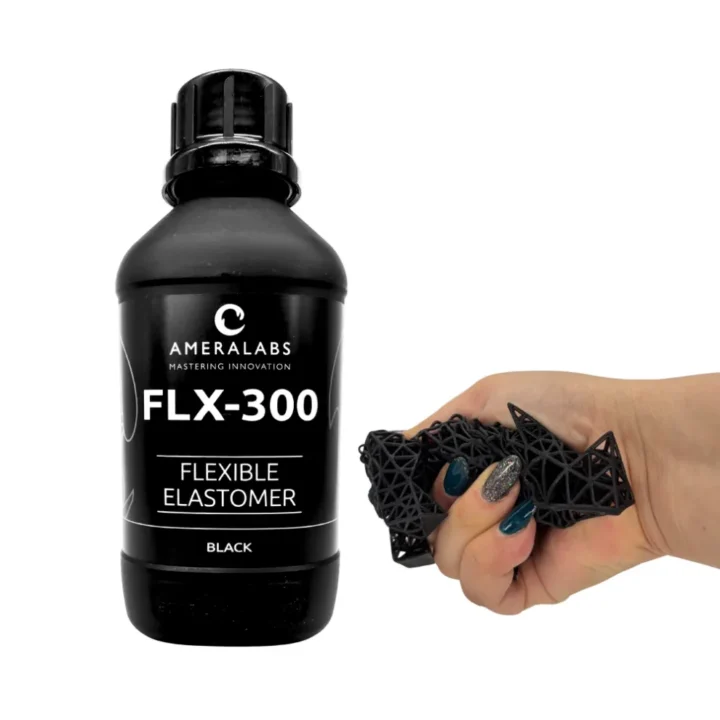
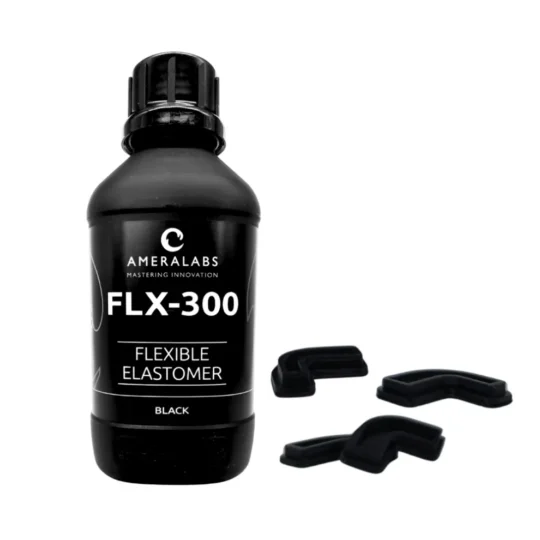
FLX-300
Best suited for
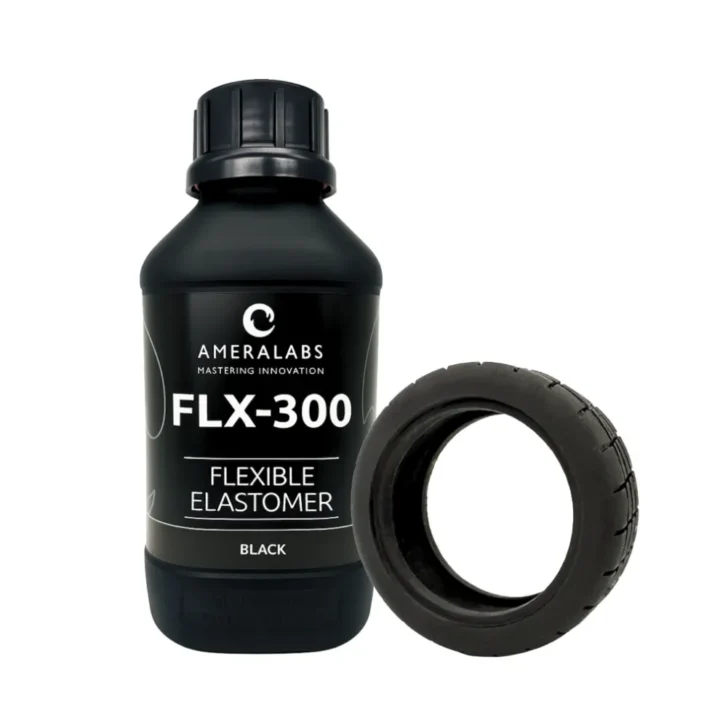
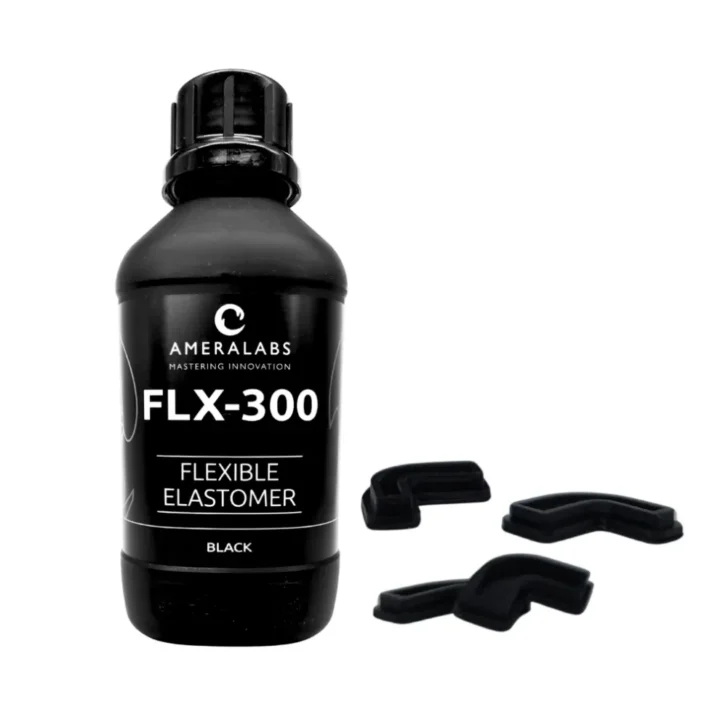
- Seals and gaskets
- Soft robotics
- Vibration dampers
- Custom-fit parts
From €65.00

Flexible resin that does not harden over time
Most flexible resins start soft and stiffen on the shelf. FLX-300 was developed specifically to avoid that, and holds its softness and elasticity far longer under normal conditions.
Long-term flexibility
Generic flexible resins stiffen because residual curing keeps going slowly after post-cure. FLX-300 uses a different chemistry that fully cures under standard 405 nm UV. Customers report no noticeable surface change after months of normal use.

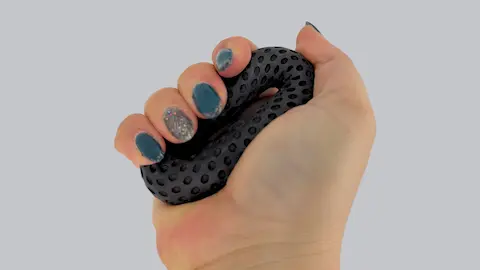
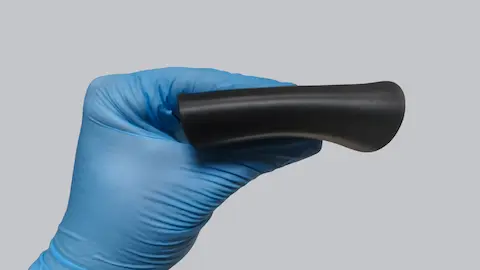
True silicone-like feel
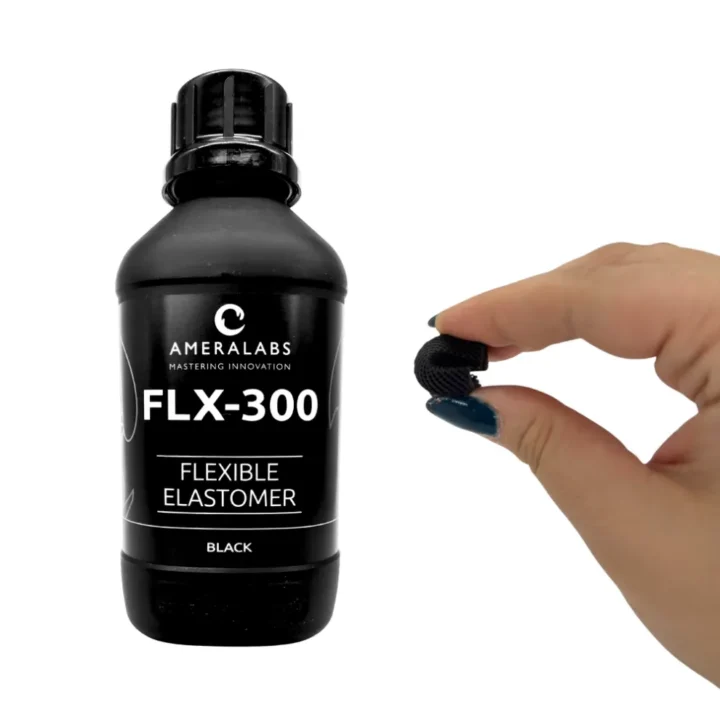
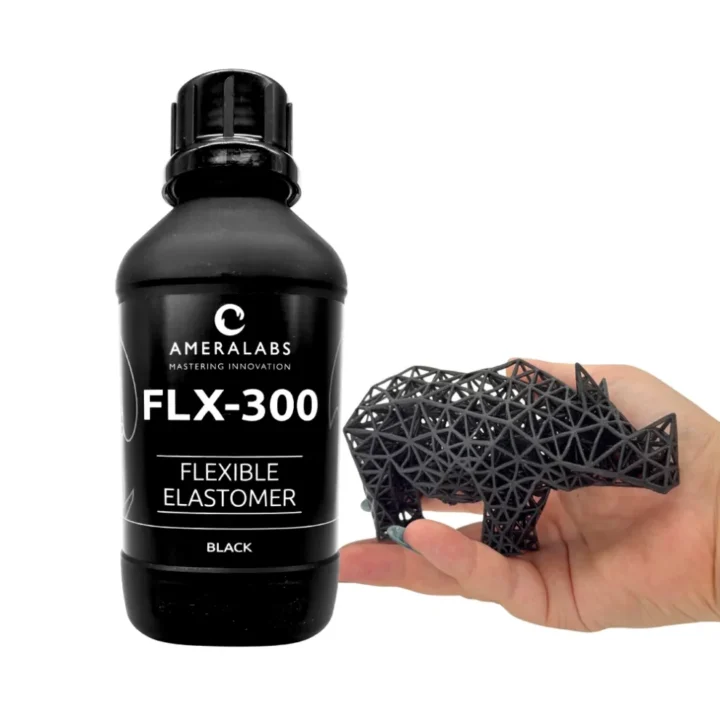
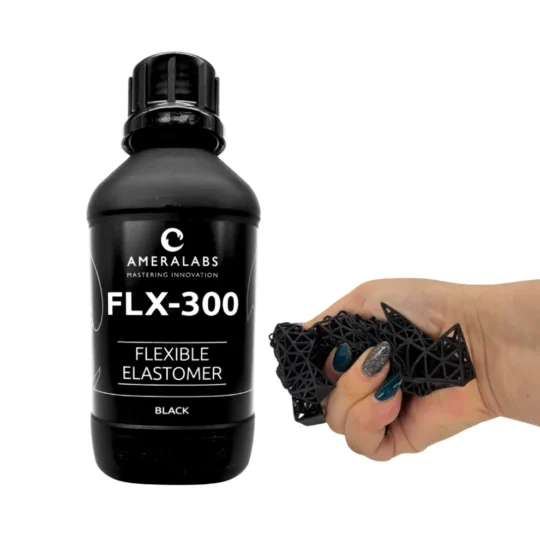
At 44 Shore A, FLX-300 has a soft silicone feel. It is significantly softer than typical TPU filaments (85 to 95 Shore A) and comparable to soft silicone phone cases.
Excellent shape recovery
FLX-300 measures 1.7% compression set at 25 °C after 72 hours. Parts return to their original shape after repeated squeezing, which is what gaskets and seals need to keep performing.
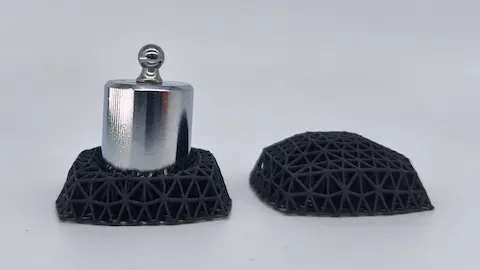
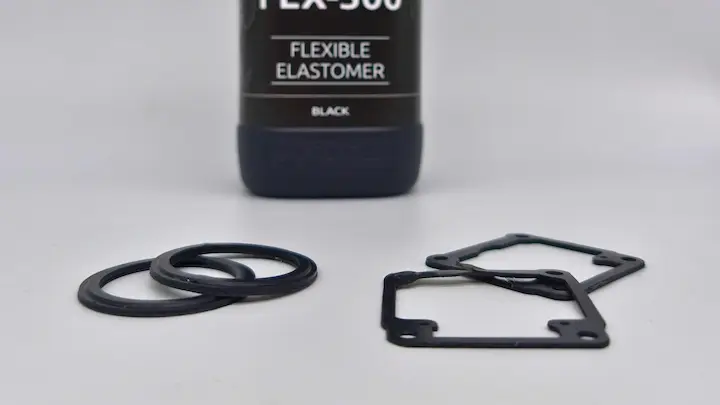
Replacement Gaskets Without the Wait
FLX-300 lets maintenance teams print custom gaskets and seals on demand instead of ordering from suppliers. Its low compression set means printed seals maintain contact pressure over time, perfect for equipment repairs where downtime costs more than the part.
Soft Grippers That Actually Grip
Print robot grippers that handle delicate objects without crushing them. FLX-300's 44A Shore hardness and high elongation create compliant fingers that conform to irregular shapes, ideal for research labs and automation projects where you need gentle, adaptive handling.
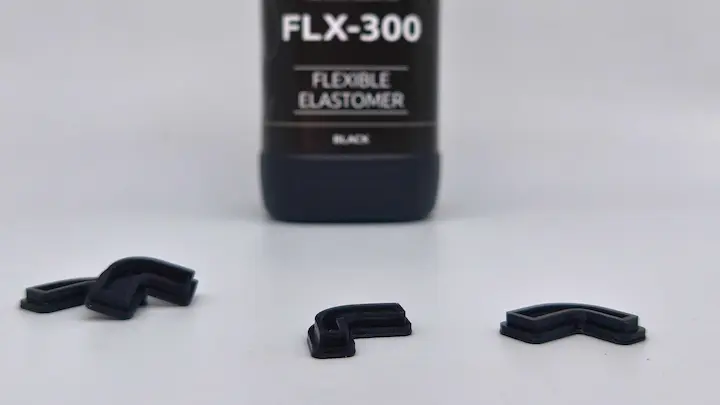
Custom Dampers for Any Mount
Design vibration isolators with the exact geometry your equipment needs. FLX-300's elastomer properties absorb shock and reduce unwanted movement in camera rigs, drone mounts, and precision instruments where off-the-shelf dampers don't fit your setup.
Frequently asked questions
How long does FLX-300 actually stay flexible?
FLX-300 holds its softness and elasticity well past the point where most flexible resins stiffen. Customers report no noticeable hardening after several months of normal use.
This is one of its main advantages. Engineers tend to choose it after getting tired of replacing parts that stiffened on the shelf or in service.
What applications is FLX-300 best for?
FLX-300 is built for gaskets, seals, vibration dampers, soft grips, and any part that needs to compress and return to shape repeatedly. Compression set is 1.7% at 25 °C after 72 hours.
That low compression set means parts keep performing after many cycles, which makes FLX-300 reliable for functional flexible components in engineering and product design.
My FLX-300 parts feel sticky after curing. What should I do?
Continue post-curing until the surface is completely dry and non-tacky. Stickiness almost always means the part is under-cured.
Check your post-cure time against the recommended cycle for FLX-300. Flexible resins need a slightly longer cure than typical rigid resins, especially in cooler rooms.
Can FLX-300 be used for skin contact or wearables?
No. FLX-300 is for industrial and functional use only. It is not biocompatibility-tested and not suitable for wearables, skin contact, or medical applications.
Always check the latest datasheet and regulatory status before any application that could involve skin contact. We say this clearly so you can make the right call.
How flexible is FLX-300 compared to TPU filament?
FLX-300 is significantly softer than typical TPU filaments. It is 44 Shore A, while most TPU filaments are 85 to 95 Shore A.
FLX-300 feels closer to soft silicone than to TPU. That makes it suitable for seals, grips, and dampers that need real rubber-like compression and recovery.