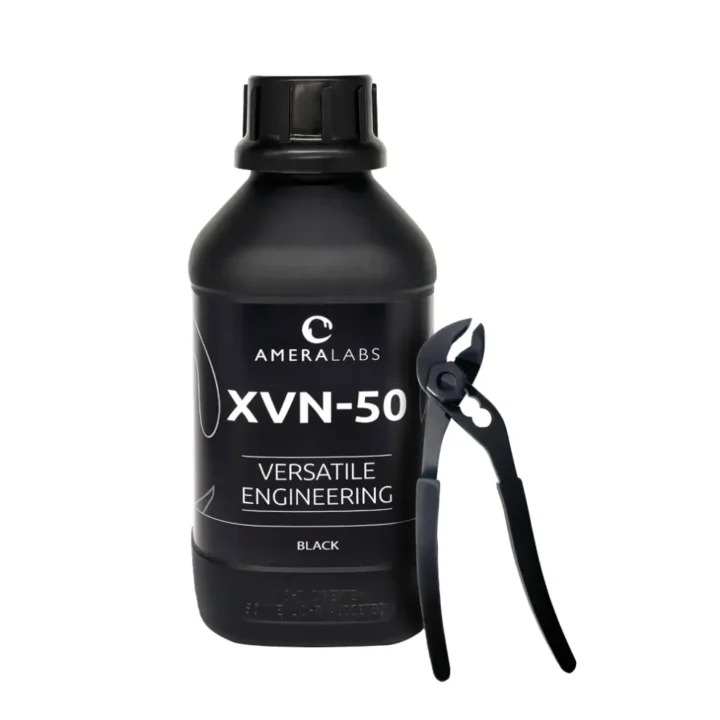
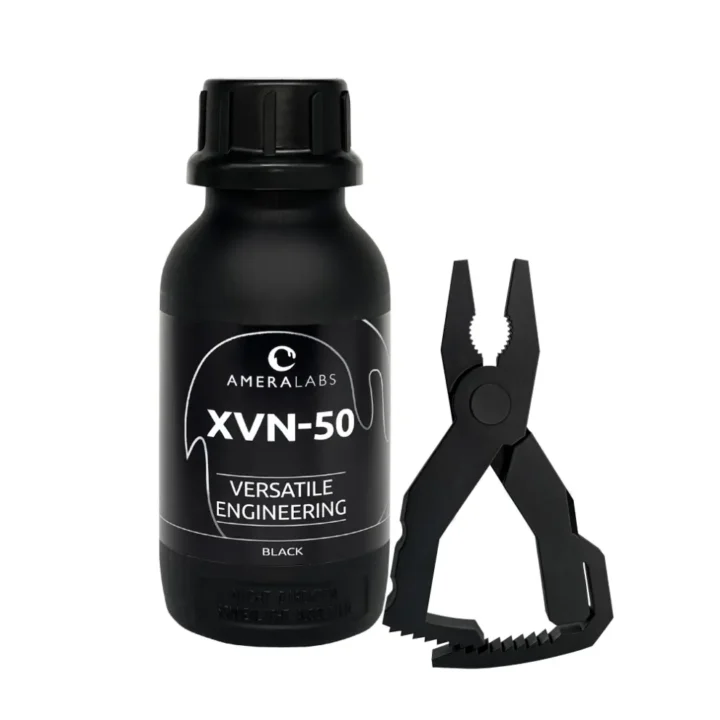
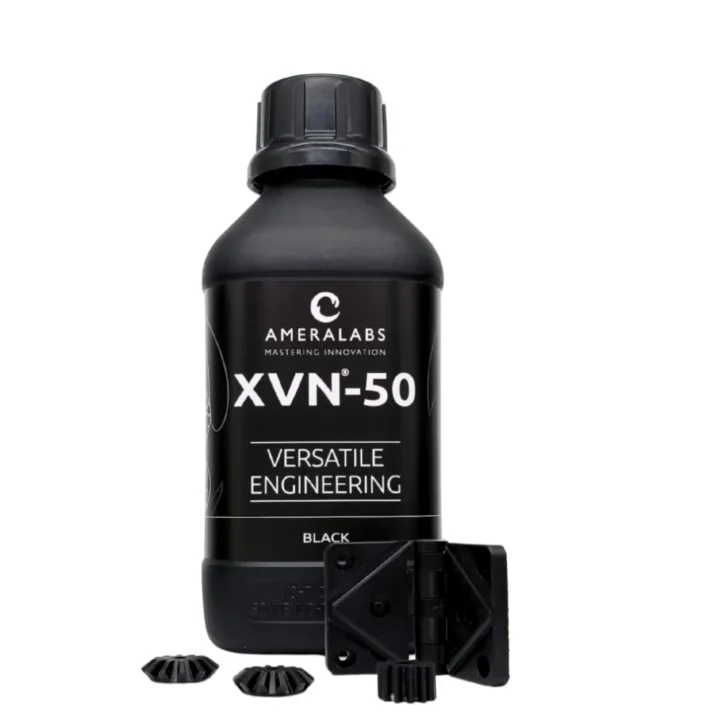
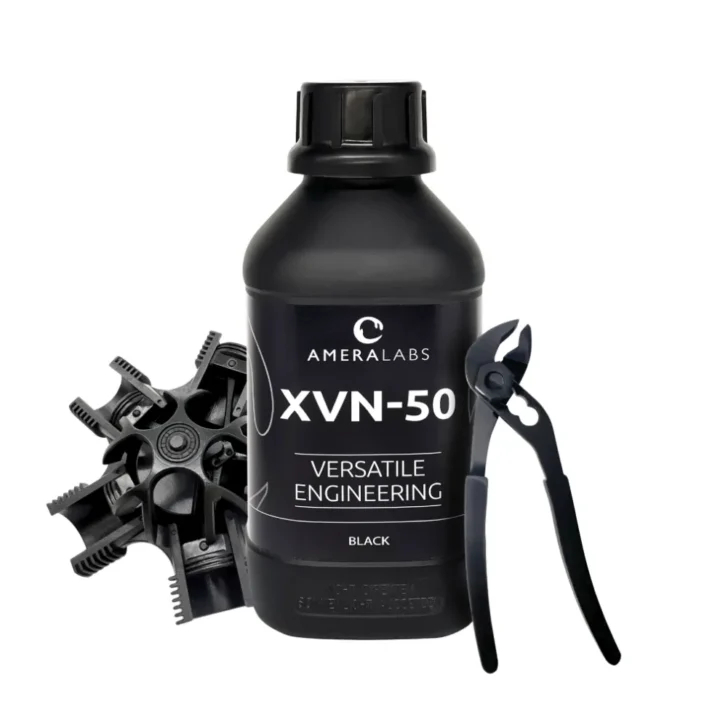
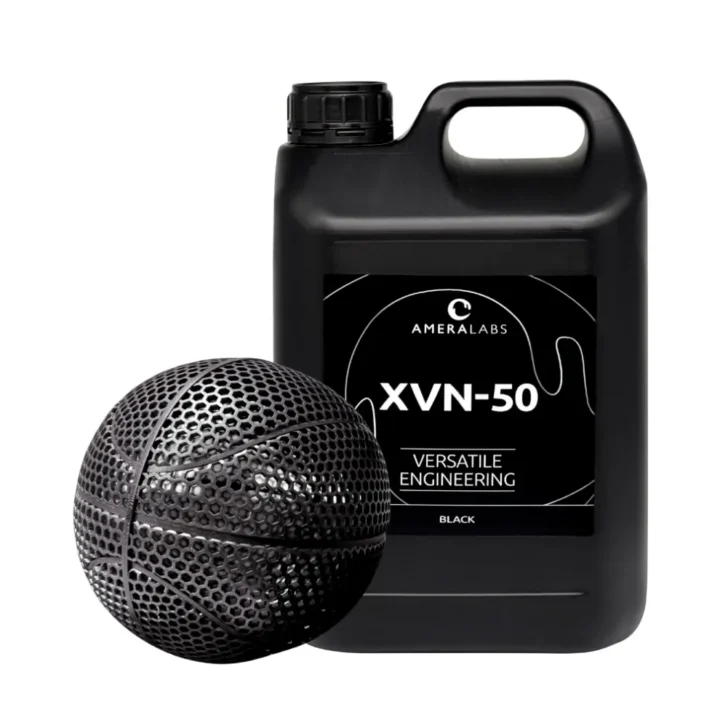
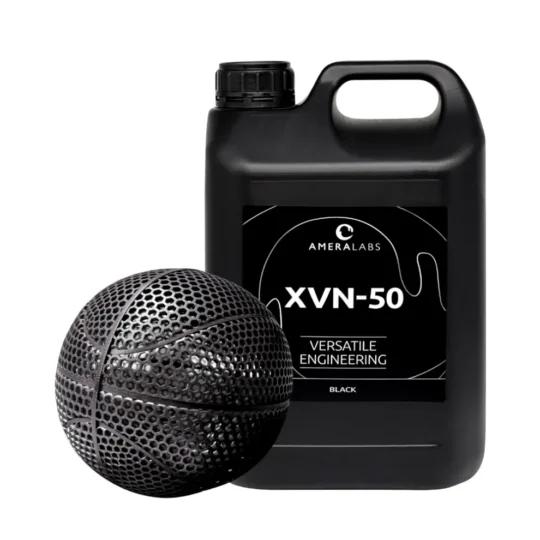
XVN-50
Best suited for
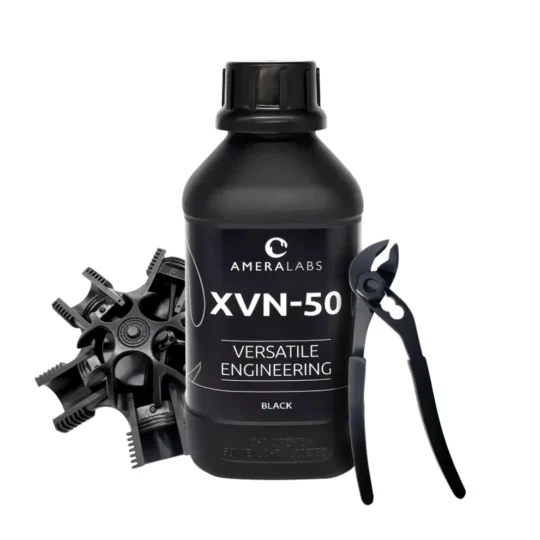
- Functional prototypes and end-use parts
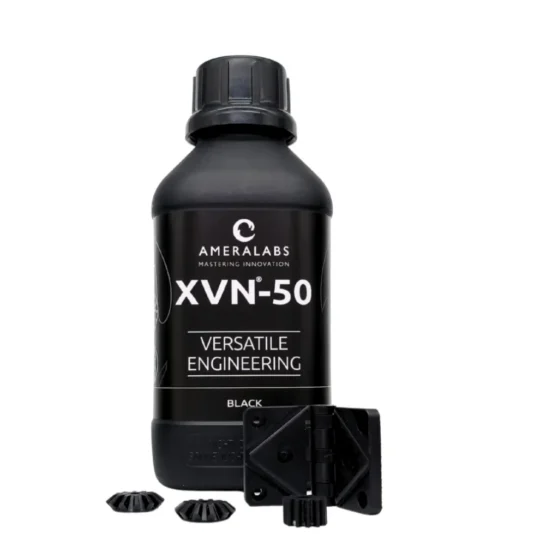
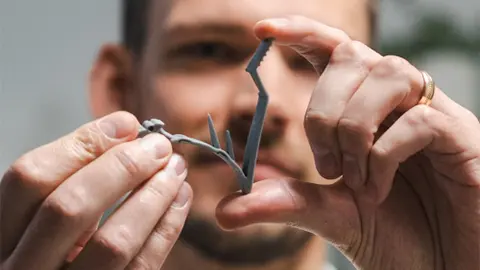
- Snap-fits, living hinges, drilled and tapped assemblies
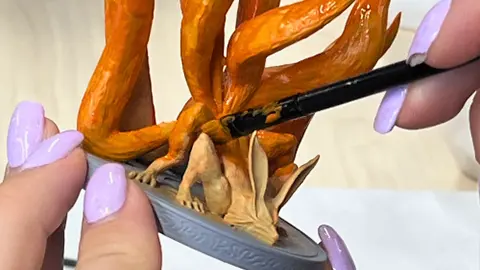
- Cosplay armor and prop fabrication
From €40.00

The adjustable wrench of resin
3D printing
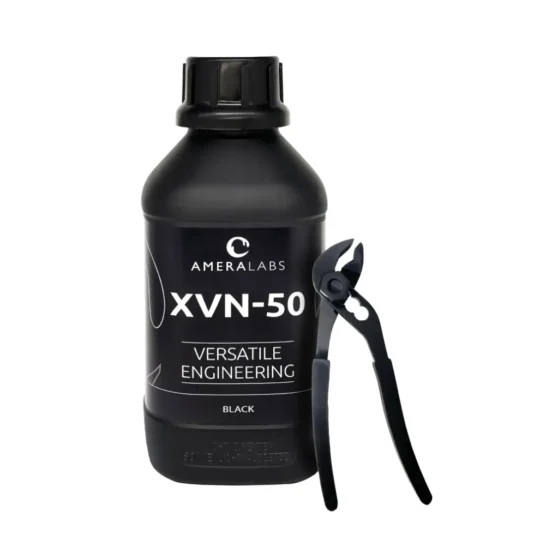
XVN-50 is tough, dimensionally stable, and easy to machine. It is the resin we use most often in our own workshop. Built for engineers, prototypers, and prop builders who need parts that hold up in real use.
Tough and flexible enough to flex
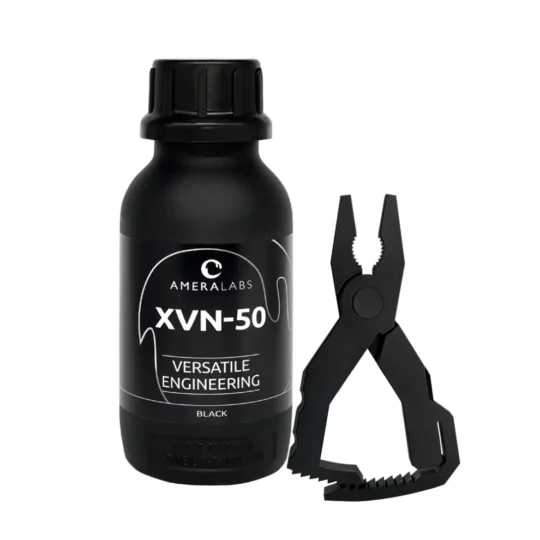
XVN-50 measures 51.2% strain at break and 5.9 kJ/m² notched impact resistance. Snap-fits flex and engage. Living hinges survive repeated cycling. Drop tests bounce instead of shatter. The material handles repeated load without fatigue cracking.

Spot-on accuracy
Low shrinkage and 3.12% water absorption over 24 hours mean mating parts fit on the first try. Conditioning data shows mechanical properties stay within 15% after water immersion, dark storage, and UV exposure. Suited to parts you need to rely on months from now.
Easy finishing
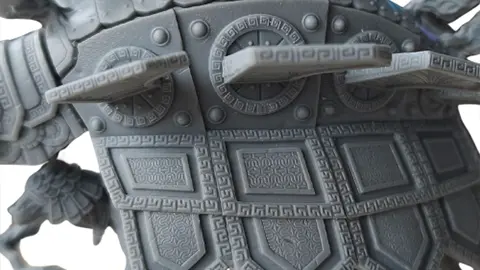
The 82 Shore D surface is non-tacky after proper post-cure. It drills, taps, and threads. It sands well for paintwork, and the matte black finish hides layer lines without extra polishing.
XVN-50: Uses
XVN-50 vs ABS-like vs All-Purpose Resin
| All-Purpose Resin | XVN-50 | ABS-like Resin | |
|---|---|---|---|
| Strain at Break | 3-15% | 51.2% | 5-40% (varies widely) |
| Tensile Modulus | 0.9-1.5 GPa | 2.03 GPa | 1.6-1.9 GPa |
| Tensile Strength (Yield/Break) | 20-35 MPa | 37.5-43.4 MPa | 32-42 MPa |
| Impact Resistance (notched) | 2-4 kJ∙m⁻² | 5.9 kJ∙m⁻² | 5-7 kJ∙m⁻² |
| Hardness | 70-75 D | 82 D | 76-80 D |
| Machinability (Drill & Thread Holding) | Poor (brittle/cracks) | Excellent (drills/taps cleanly, holds threads well) | Moderate (may crack under stress) |
| Dimensional Stability | Moderate shrinkage/warpage | High (low shrinkage, no cracking/deforming) | Good |
What Experts Are Saying About XVN-50
Frequently asked questions
How do I get reliable screw threads with XVN-50?
XVN-50 holds tapped threads for normal use. For parts that will be disassembled often, brass heat-set inserts last longer.
The material is tough enough to handle normal workshop assembly without cracking around the thread. Heat-set inserts remain the right choice for high-cycle applications where thread wear becomes an issue.
My XVN-50 parts feel slightly flexible right after printing. Is that normal?
Yes. Full mechanical properties develop after proper post-curing and 24 hours of resting. Until then, parts can feel slightly under-cured.
Test critical functional parts only after they have fully stabilised. The behaviour is normal for this resin and does not indicate a problem with the material or your settings.
Can I use XVN-50 for cosplay armor and props?
Yes. It is a common choice for both. The matte black finish hides layer lines well and the toughness handles convention use without chipping.
It sands easily and takes paint well. The combination of toughness and good surface finish makes XVN-50 popular for both functional prototypes and finished costume pieces.
How do I get the best surface finish with XVN-50?
Post-cure fully, then sand progressively if needed. The matte surface already hides minor layer lines better than glossy resins.
For high-gloss finish, sand from 400 to 2000 grit and apply a clear coat. For textured grips or handles, the as-printed surface usually works without further treatment.
Is XVN-50 suitable for parts that need tight tolerances?
Yes. XVN-50 has good dimensional stability, and mating components and assemblies typically fit on the first print. Low shrinkage and the conditioning data make it reliable for parts that must hold tolerance over time.
This is one of the reasons it is a common pick for functional engineering work and end-use components.