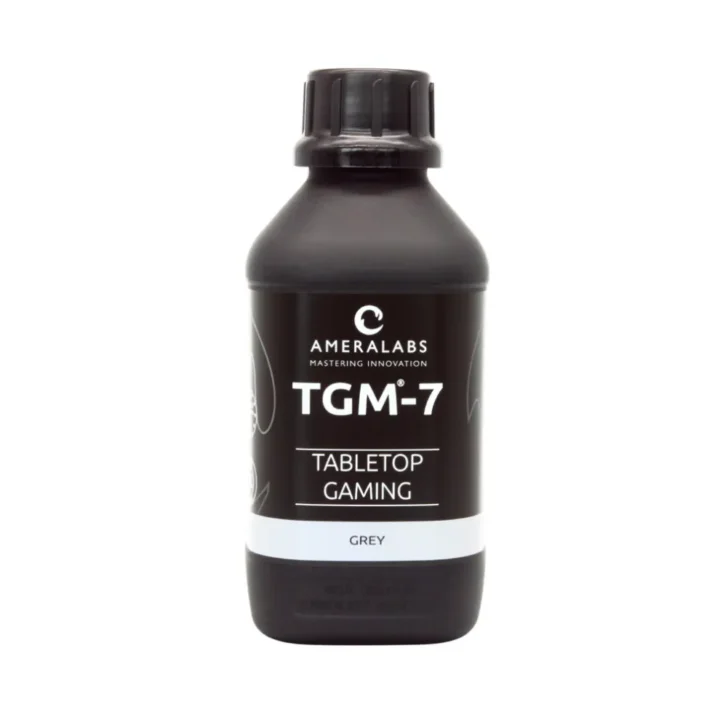
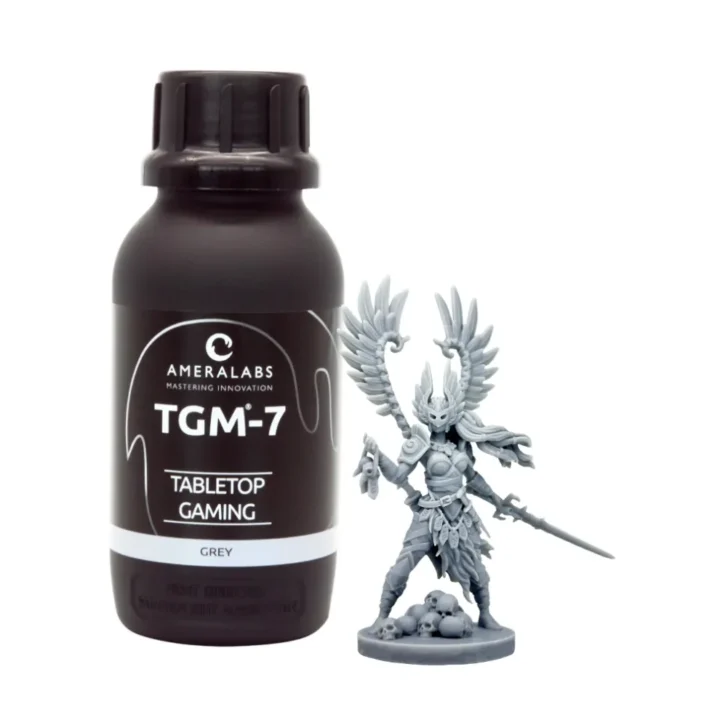
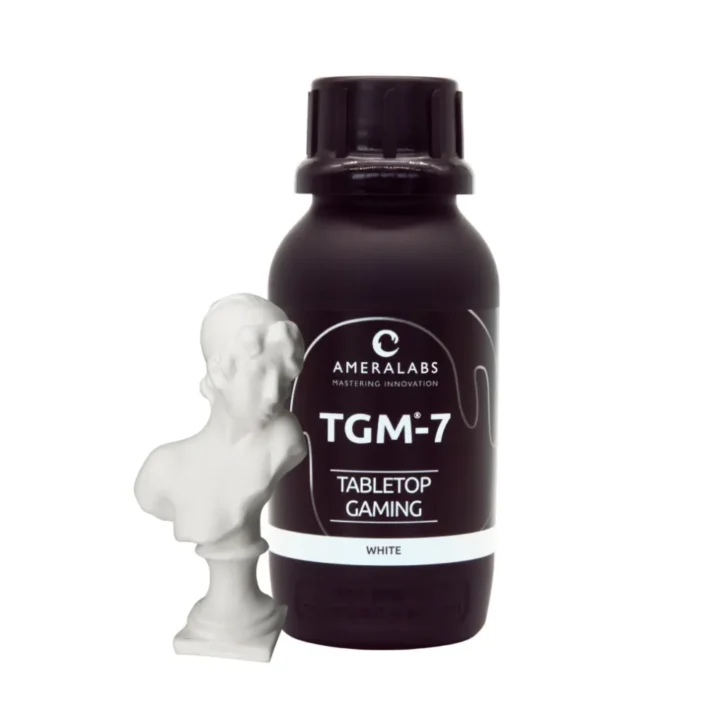
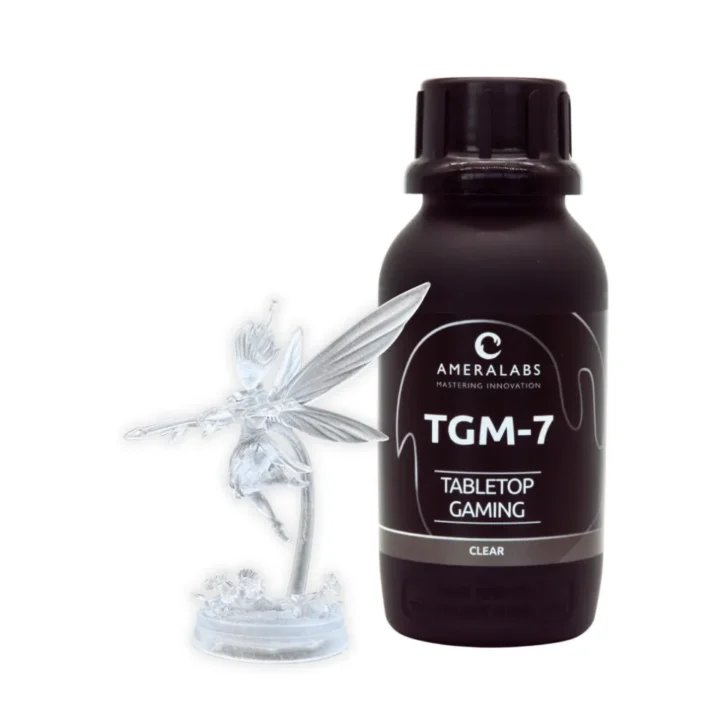
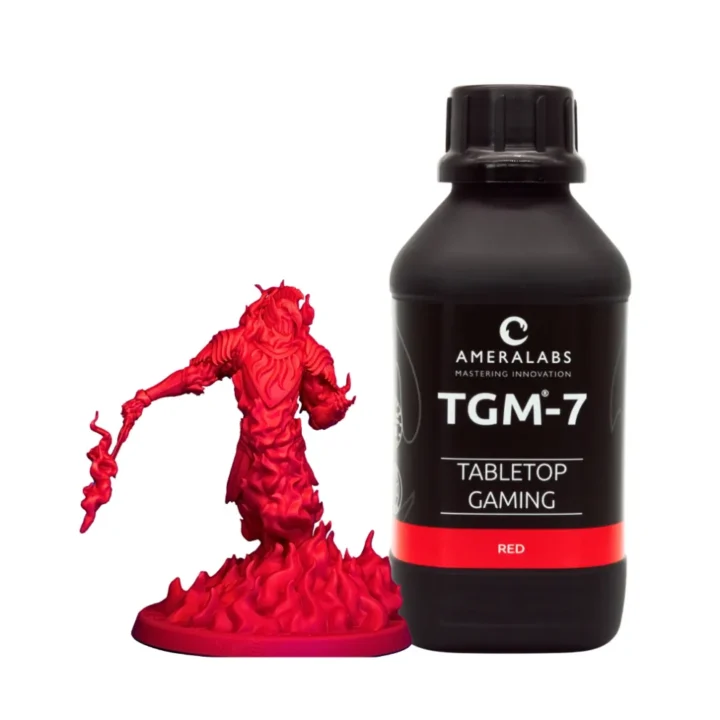
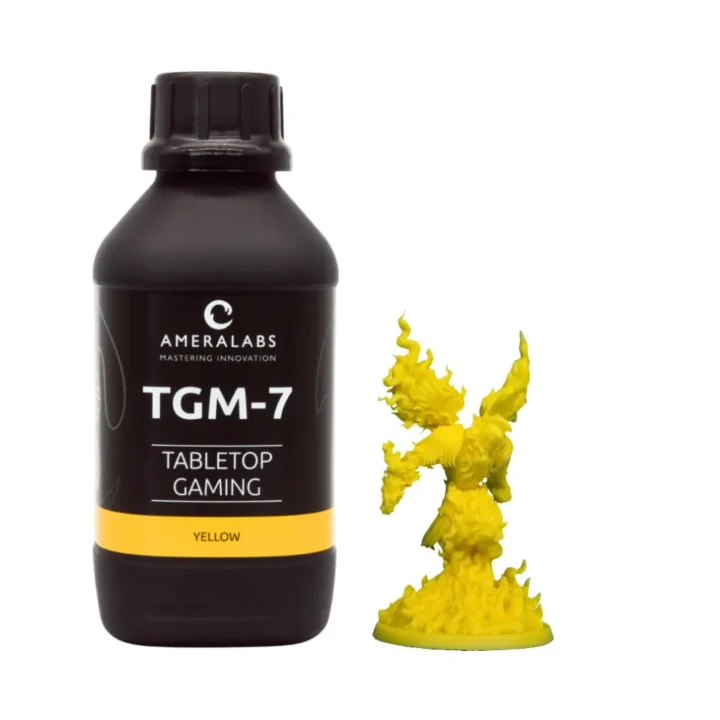
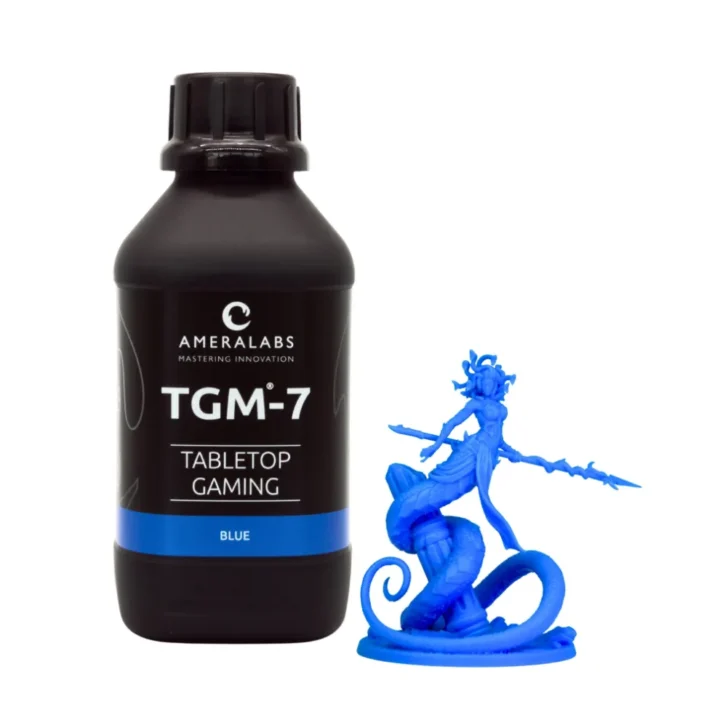
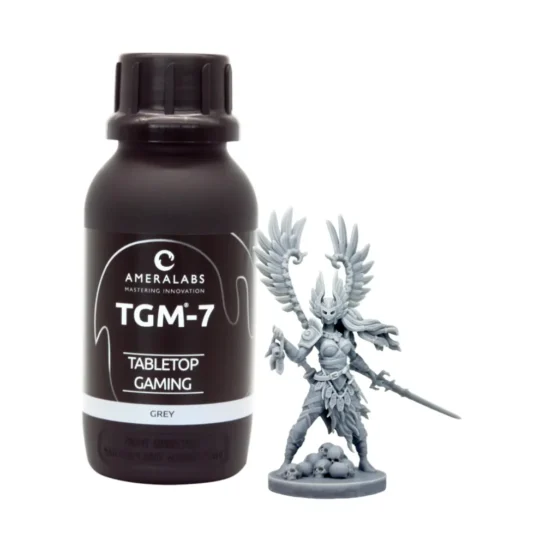
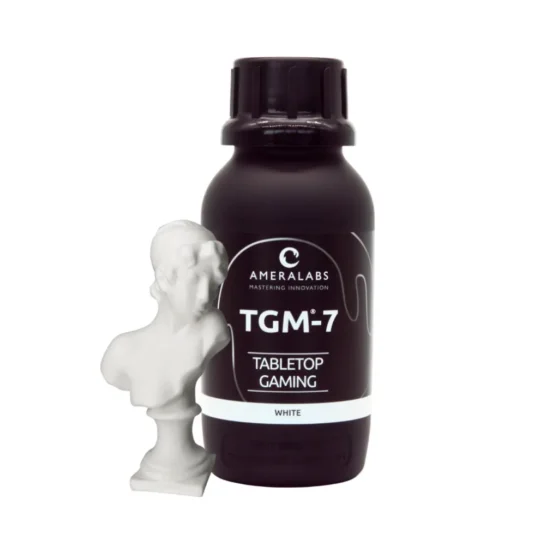
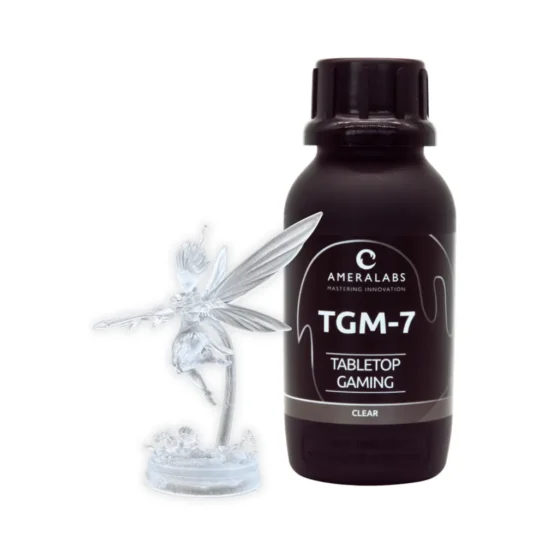
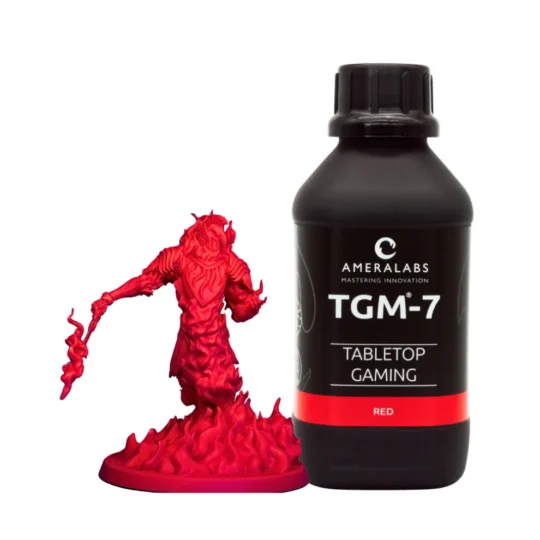
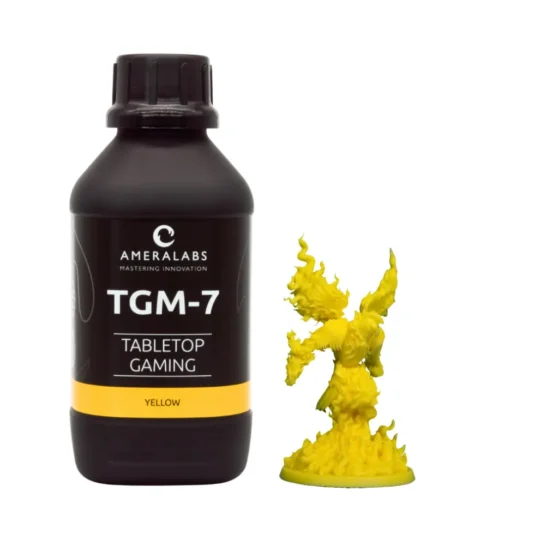
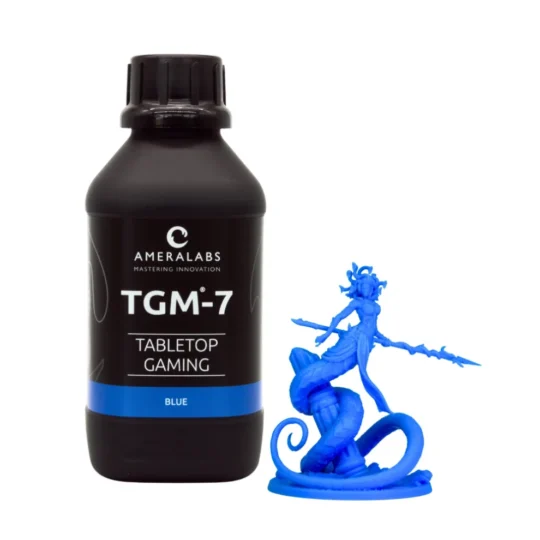
TGM-7
Best suited for
- Tabletop gaming miniatures
- Display models and collector figures
- Production-volume miniature studios
From €36.00

Recommended for Miniatures by






Built for production miniatures
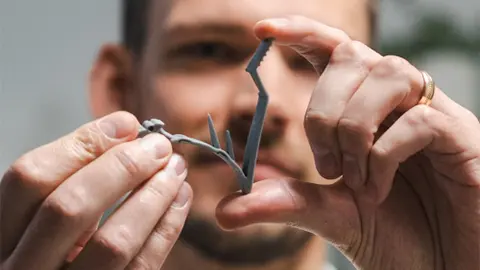
TGM-7 is built for studios that need minis to survive real use. It balances toughness and detail, so thin parts like swords, antennae, and cloaks flex instead of snapping. The hard glossy surface takes paint well, and the formula stays consistent from bottle to bottle.
Drop-survival without losing detail
TGM-7 measures 61.6% strain at break (ISO 527-5A) and 8.22 kJ/m² notched impact resistance (ASTM D256). Delicate parts bend on impact rather than shattering. Standard rigid resins break easily on those features. ABS-like resins often soften surface detail when they take a hit. TGM-7 holds toughness and detail at the same time.

Detail that shows up on camera
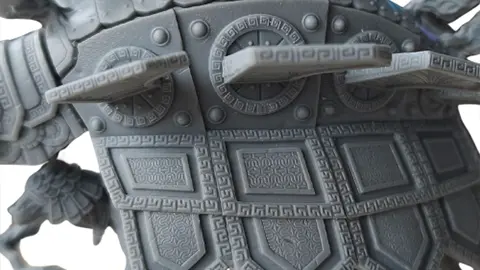
The 78 Shore D surface holds cloth folds, scale armor, and faces at 28 to 32 mm scale without softening. Stabilised pigment dispersion keeps colour consistent across bottles, so your prints look the same when you photograph them and when you paint them.
Paint-ready out of the cure station
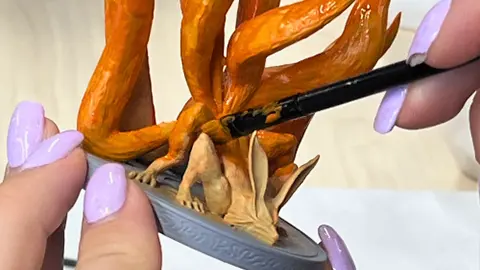
After a proper post-cure the surface is non-tacky. Spray primers and brush-on primers adhere directly. For smooth armor panels a light 400 to 600 grit scuff helps. For most pieces you can prime and paint straight away.
Miniature Production
TGM-7 vs ABS-like vs All-Purpose Resin
| All-Purpose Resin | TGM-7 | ABS-like Resin | |
|---|---|---|---|
| Strain at Break | 3-10% | 61.6% | 20-30% |
| Impact Resistance (notched) | 2-4 kJ∙m⁻² | 8.22 kJ∙m⁻² | 5-7 kJ∙m⁻² |
| Tensile Strength | 20-35 MPa | 38.4 MPa | 32-40 MPa |
| Detail Sharpness | Decent | Sharp | Soft |
| Hardness | 70-75 D | 78 D | 76-80 D |
What Experts Are Saying About TGM-7
Curious how TGM-7 performs in real-world projects? Hear directly from miniature YouTubers and influencers as they share their honest experiences, feedback, and results using our most durable miniature resin yet.
Frequently asked questions
What kind of supports work best with TGM-7?
Use 1.5 to 2 mm support columns with 0.2 to 0.6 mm tips, plus a short light-off delay so the resin can settle before exposure. TGM-7 has medium viscosity (540 mPa·s at 25 °C) and benefits from slightly thicker supports than most brittle resins.
This combination reduces sagging on overhangs and improves layer adhesion on thin features. Removing supports before full post-cure further lowers the chance of breaking delicate parts. Full orientation and support recommendations are in the TGM-7 printing guide.
My prints look good but break later during handling or shipping. What should I check?
The most common cause of late breakage is incomplete post-curing. TGM-7 reaches its full toughness only after proper UV exposure, so confirm the surface is completely non-tacky before handling.
A thin clear varnish adds extra protection on minis that ship to customers. If breakage continues after proper curing, check your post-cure time and UV lamp output. Older or weak lamps undercure parts in ways that look fine on the bench but fail in the post.
How do I improve paint adhesion on TGM-7 prints?
Wash thoroughly in IPA, post-cure until the surface is fully non-tacky, and let the print dry for 24 hours before priming. That single workflow fixes the most common adhesion problems.
A light 400 to 600 grit scuff helps on smooth armor plates. Both spray and brush primers (Citadel, Vallejo, Army Painter) hold well after proper preparation.
Is TGM-7 worth the higher price compared to cheaper resins?
For production work or selling minis, yes. Fewer reprints, fewer broken pieces in transit, and consistent settings between bottles usually recover the price difference quickly.
For casual hobby printing, cheaper resins may be acceptable. Once volumes increase or pieces are sold, the lower failure rate makes the difference matter.
How many minis can I expect from a 1 kg bottle?
A 1 kg bottle of TGM-7 typically produces 100 to 120 standard 28 to 32 mm minis, depending on geometry and support usage. Run a slicer estimate with your files for the most accurate number for your style of printing.
Heroes, monsters, and large vehicles use more resin per piece. Rank-and-file infantry pushes the count higher.
What is the best way to prime and paint TGM-7 prints?
Wash thoroughly, post-cure until non-tacky, and let the print rest 24 hours before priming. Both spray and brush primers work well on the cured surface.
A light 400 to 600 grit scuff helps on smooth armor plates. Citadel, Vallejo, and Army Painter primers all adhere reliably after proper preparation.
How should I store printed minis long-term?
Keep printed minis out of direct sunlight and high heat. For display pieces under bright lights, a thin clear varnish helps prevent UV-related brittleness over years.
Normal indoor storage is fine for gaming minis. For pieces displayed under strong lights for years, a UV-protective clear coat is recommended.
Can I mix TGM-7 with other resins?
Mixing TGM-7 with other resins is not recommended. The formulation is balanced specifically for the detail and toughness miniature work needs, and ad-hoc blending tends to break that balance.
If you need a different mechanical profile, we have purpose-built resins for that. The TGM-7 formulation took years to develop, and mixing usually compromises one property to gain another.